

 English
 Lietuvių
 Polski
 Русский
© 2020, Made with passion by ITMAN.
Visos teisės saugomos




from €20 per person
Route of the excursion: Vilnius – Kaunas.
One day excursion.
The price shown is for a group of 10 people.
The price includes: guide services.
Transport, food, accommodation and other services – for an extra charge.
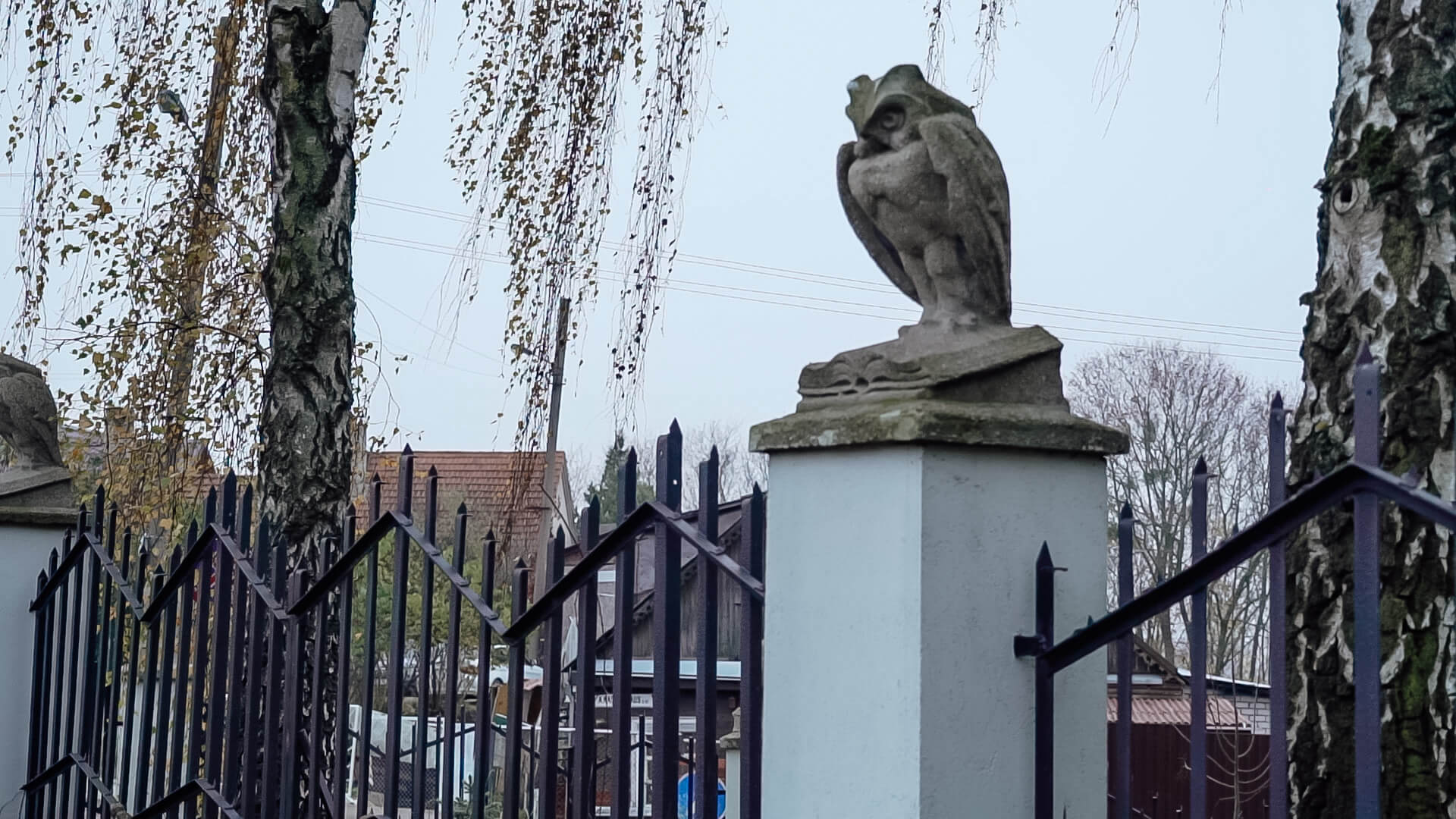
Leaving for Kaunas early in the morning. Tour of interwar capital: Laisvės avenue and Putvinskio street. Tour of Žaliakalnis on foot, having a look at wooden and brick villas of Kaunas celebrities. Funicular, Kaunas art school “Pelėdų kalnas”. A visit to the memorial museum of L. Truikys and M. Rakauskaitė. Then free time for lunch in the central part of the city. Return to Žaliakalnis. A visit to Sugihara house-museum. A visit to the Church of Christ’s Resurrection and its roof terrace ad miring the panorama. Free time. Returning home towards nightfall.
When ordering the selected excursion, we can also offer other services for a wonderful pastime. If you choose additional services, we will contact you immediately and offer the best possible accommodation, transport or other services provided by our reliable partners, so your stay will be unforgettable!
Unique pearls of Žaliakalnis
Žaliakalnis is located between the Neris and Girstupis valleys. Big forest used to grow there, but in the 17th century, felling of trees started and settlements began growing. In 1919, Žaliakalnis officially became part of Kaunas and finally took shape after WWI until 1940. Many buildings were constructed following modernism style. Living houses prevailed in Žaliakalnis, however, buildings to serve other functions were also built. In 1925, the first stadium in Lithuania was built. Funicular started running in 1931. The Zoo was opened in 1938. Embassies of two foreign countries, Italy and Switzerland, were functioning in Žaliakalnis as well as consulate of Japan. The following objects deserve attention as well: the Church of the Christ’s Resurrection, Žaliakalnis Jewish cemetery, Ąžuolynas Park, Old believers’ church, Kaunas art school (“Pelėdų kalnas”), a synagogue (1858).
Intelligentsia took a liking to the developing district close to the centre. The prime minister of Lithuania J. Tubelis, architect F. Vizbaras, men of letters K. Binkis, V. Mykolaitis-Putinas, Salomėja Nėris, B. Sruoga, A. Vienuolis, traveller and publicist M. Šalčius, opera soloists K. Petrauskas, A. Sodeika, artists J. Zikaras, P. Kalpokas and R. Kalpokas lived there.
Žaliakalnis is surrounded by oak trees, a peaceful location, where outstanding personalities of Lithuania used to live and create, where it is nice to live or simply have a walk.
Žaliakalnis funicular. It is a prominent object of the district, 89 years of age. It can take 36 passengers at a time. It started running in 1931. It takes this historical means of transport over a minute and a half to get uphill from Putvinskis street. The lower stop has a roofed shelter. In interwar period, the funicular became extremely popular and indispensable in everyday life of Žaliakalnis residents.
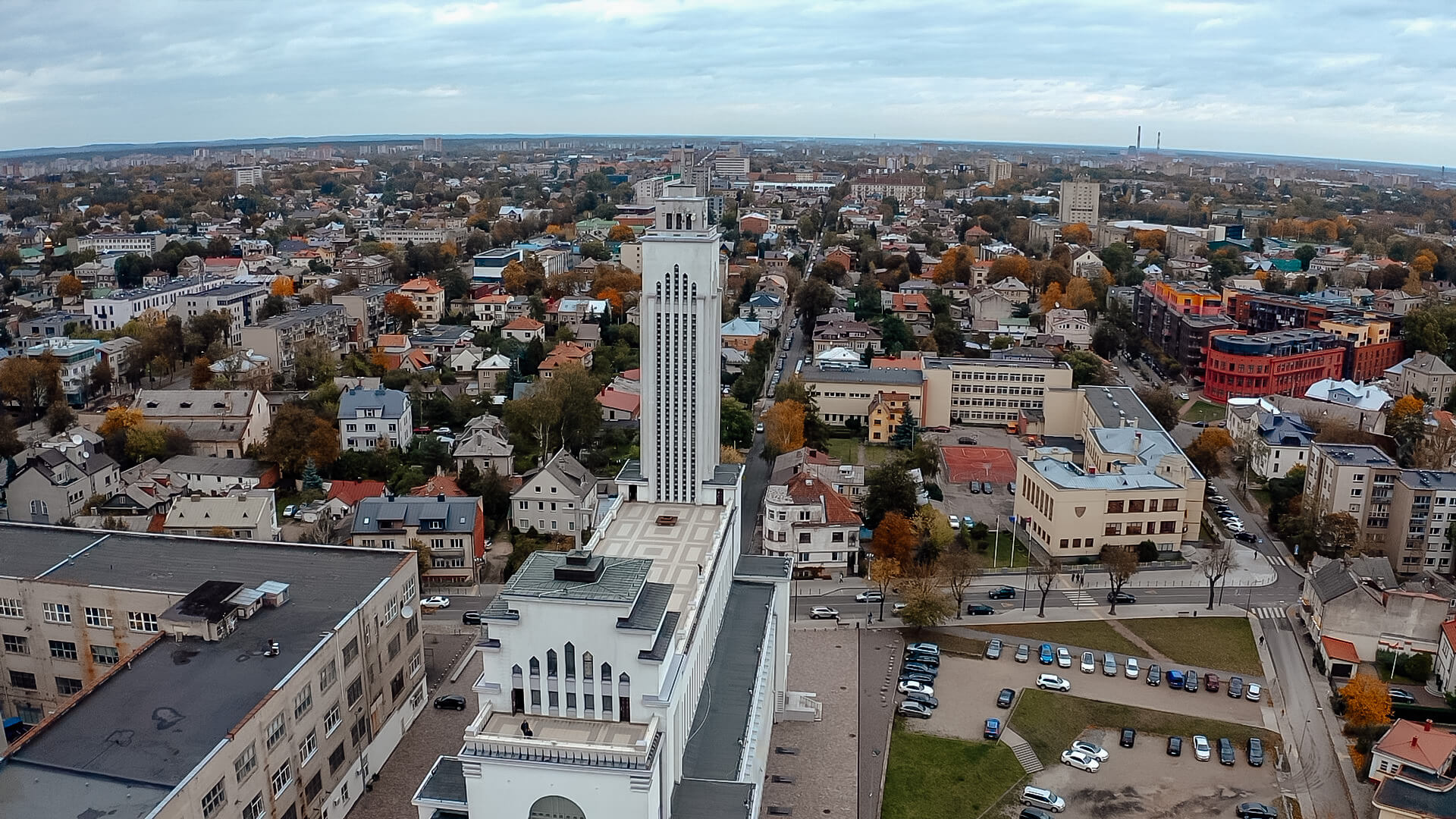
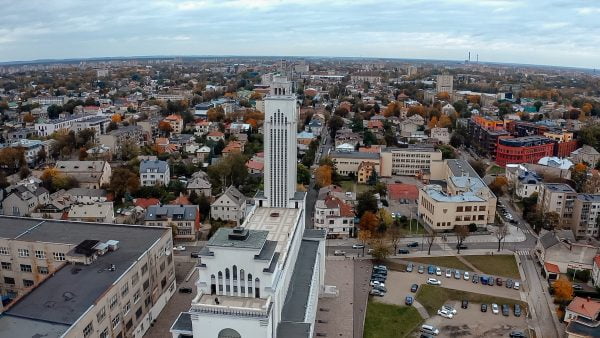
Christ’s Resurrection Church (Žemaičių str. 31). Seen from all the sides it is a true pearl of Žaliakalnis. The church is not only an example of Kaunas modernism architecture but a monument to Lithuania’s statehood as well. The idea to build a church as a symbol of freedom in gratitude to God for regained freedom formed in 1922, after Lithuania regained independence. Architect Karolis Reisonas designed the church. To date the most frequently visited place is a terrace erected on the roof of the church as the most beautiful panorama of Kaunas city is seen from it.
Ąžuolynas is one of the largest and most beautiful Kaunas city parks (78 ha). It consists of remains of a huge number of oak trees, which used to grow at the confluence of the Nemunas and the Neris. Kaunas people like to have a walk, rest or go in for sports there.
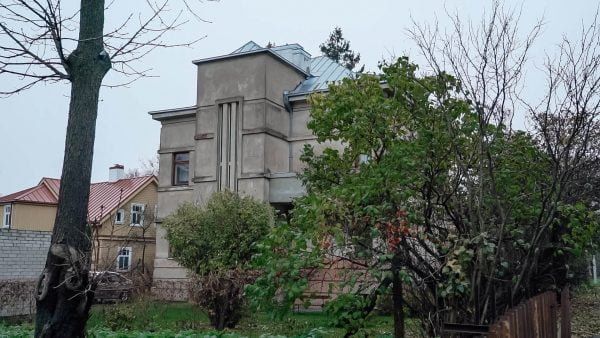
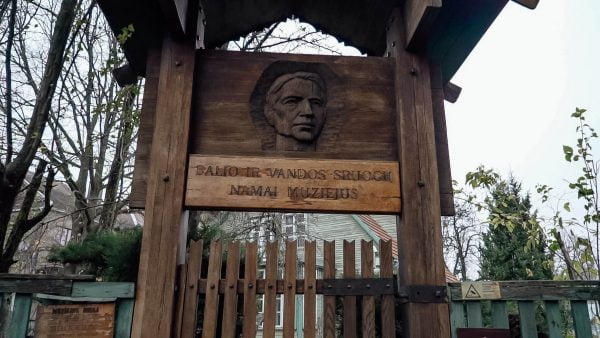
Memorial Museum of L. Truikys and M. Rakauskaitė. Audronė Girdžijauskaitė in her book “Nutolę balsai” describes the couple in such a way: “Before war Žaliakalnis neighbours saw them, young, walking in their garden many a time naked as true participants of nature”. There is Buda’s sculpture in their house, incense is burning, walls are decorated by Persian rugs and Chinese paintings. Who are the people, interested in Eastern culture, old beliefs and not afraid to be themselves? Liudas Truikys was a famous stage designer, and Marijona Rakauskaitė was opera prima donna. Kaunas united them. The first meeting took place in 1935, and the couple lived together until Marijona’s death in 1975. Liudas Truikys stands next to such artists as Adomas Galdikas, Stasys Ušinskas. They were the only ones in the soviet era who wore long fur coats, went to “Tulpė” café for lunch, where they had their own table and waiter.
Reaching career heights. Liudas Triukys became famous in interwar Kaunas thanks to his scenography for state theatre. He was acknowledged in 1937 in the World exhibition in Paris, where he was granted a diploma for scenography of opera “Trys talismanai” by Antanas Račiūnas. The artist created his most important scenography projects later, in the 6-9th decades of the 20th century, in Kaunas Music Theatre and Opera and Ballet Theatre in Vilnius. His most famous works include decorations for operas Don Carl, La Traviata, Gražina, Aida, Otello, Madame Butterfly (1986). He also created watercolours, decorated church interiors.
Marijona Rakauskaitė was a soloist in Kaunas Music theatre from 1923 to 1948, Opera and Ballet Theatre of Lithuania. She performed leading roles in Aida, Mask Ball, Il Travatore by G. Verdi, Carmen by G. Bize, Tosca, Madame Butterfly by G. Puccini, over 30 roles. They were an erudite couple constantly participating in intellectual gatherings. They were not married, had no children. Both followed a strict day regime – Marijona used to stress that body and should have to be in harmony.
It is stated that they did not lead a life of a normal couple, as there relations were limited to intellectual conversations. S. Ušinskas used to say: “If you want to create good art you have to have a good drink and make love to a woman,” L. Truikys was of the opposite opinion: “If you want to create good art and do the work properly, kundalini energy responsible for sexual and creative energy should be used only for creation, no love making, and drinking is blocking consciousness and killing of the brain.” They collected a large number of books. Liudas and Marijona belonged to the studying elite; they were constantly studying. L. Truikys respected Buddhism. Their home contained quite a number of Eastern symbols; there was a gilded bronze statue of Buda made in the 19th century, a Buddhist reliquary. There were ancient items of applied art from China, India, Japan.
L.Truikys collected rugs. There was a collection of Persian rugs in their home dating back to 17-19th centuries. L. Truikys used to say to students: “If your heart became void in a creative sense, meditate on the colour of Buda’s hair (dark blue) and your heart will recover”.
The couple settled at the address E. Fryko str. 14 in 1944. Truikys’ studio is completely authentic. There is an old chest in M. Rakauskaitė’s room from Chicago.
The last room used to be the bedroom, which is a space allotted to displaying M. Rakauskaitė’s belongings nowadays. Marijona used to put on makeup, add eyelashes every day. You can see eyelashes on the table, the ones for the performance and those for everyday wear, which were a bit shorter, of violet and blue colour including. She matched the hair colour to that of clothes, which was atypical in Lithuania.
Japanese consulate. It was in this building that Chiune (Sempo) Sugihara, vice-consul of the Japanese consulate, resided before WWII. This diplomat issued about 6000 Japanese transit visas in July-August of 1940 to Jewish people from Lithuania, Poland, Germany saving them from Holocaust. Jews called the gate, which used to stand by the house, “The Gate of Hope”. On August 2, 1940, all the embassies were closed; however, the Japanese consulate moved to the Metropolis restaurant and continued issuing visas. Even before leaving Kaunas, consul Sugihara managed to issue several dozens of visas at the railway station, right on the platform. In 1985, Sugihara was granted the title of the Righteous Gentile among the Nations.
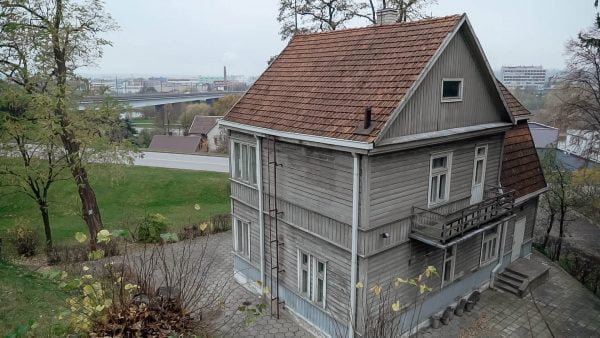
Wooden architecture. Žaliakalnis is one of the prestigious districts of Kaunas famous not only for the elite residing here in the interwar period but by wooden architecture either. Wood was popular building material in interwar Kaunas. In different districts of the city unique wooden buildings comprising wooden architectural heritage of Kaunas can be found.
Žaliakalnis villas. There lived many prominent personalities in Žaliakalnis. Coming closer to the houses we can see memorial plaques reminding of people who used to live here.
Zikaras memorial museum. The house with ethnic elements used to belong to famous Lithuanian sculptor J. Zikaras. J. Dubauskas designed the house, adapted to the slope relief: two floors from the courtyard, and one from the street. Later a laundry with a balcony and terrace were added, with a wonderful panorama of Kaunas Old Town opening from the terrace. J. Zikaras’ studio-workshop was arranged on the ground floor. Elite of the period, artists visited it. The memorial museum opened in 1999, and the most interesting facts of J. Zikaras’ life are presented during educational program “Visiting the creator of Laisvė monument”.
House of M. Šalčius. On the ground floor of this house, there lived one of the most famous travellers, journalists, public figures – Matas Šalčius from 1925 to 1936. In 1929 M. Šalčius together with A. Poška motorcycled Europe and returning he wrote a book “Visiting 40 nations”.