

 English
 Lietuvių
 Polski
 Русский
© 2020, Made with passion by ITMAN.
Visos teisės saugomos




from €18 per person
Route of the excursion: Vilnius – Kaunas.
One day excursion.
The price shown is for a group of 10 people.
The price includes: guide services.
Transport, food, accommodation and other services – for an extra charge.
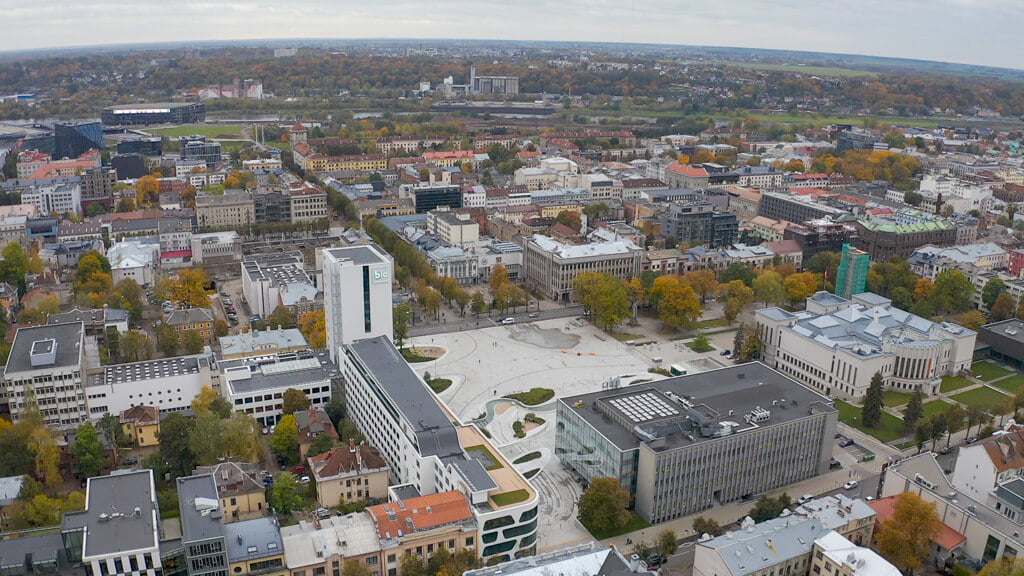
Arriving to Kaunas early in the morning. The tour starts in the Old Town, by Kaunas Castle. Santaka Park, Church of St George. Proceeding to the Town Hall, a visit to the Cathedral Basilica of St Apostles Peter and Paul; Perkūnas House, Vytautas Church, Aleksotas Bridge. Walking along Vilnius str. towards the Laisvės Avenue. A short walk along the avenue. Free time for lunch. A visit to M. K. Čiurlionis Museum. Continuing tour by bus and on foot in the modern city (Bus Station, the Nemunas Island with Žalgiris Arena, FEZ etc.).
When ordering the selected excursion, we can also offer other services for a wonderful pastime. If you choose additional services, we will contact you immediately and offer the best possible accommodation, transport or other services provided by our reliable partners, so your stay will be unforgettable!
The old and new Kaunas
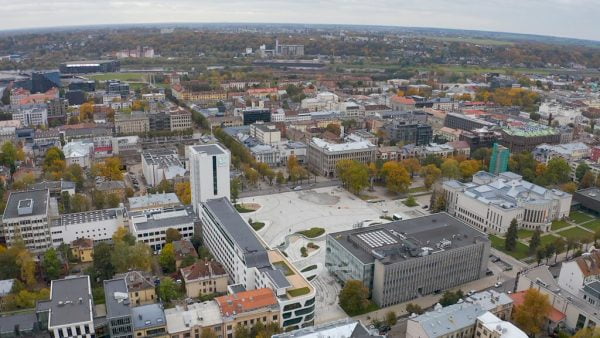
The second largest city of Lithuania, Kaunas, is situated at the confluence of the two longest rivers of Lithuania, in the valley of the Nemunas and the Neris. It is unique thanks to its rich history geography and landscape. Kaunas is a centre of science, culture, industry and entertainment, an important crossroad of Lithuania. It is here that important roads and railways intersect. It is convenient to access Kaunas by any means of transport: by plane at the international Karmėlava airport, along VIA Baltica highway. The city’s rich history makes an impression. There are many protected territories, reserves in which fauna included into the Lithuania’s Red Book could be found. The most beautiful parks of the city are Ąžuolynas, Pažaislis and Panemunė pine forests. There are many museums ranging from large to tiny ones. The most interesting part of Kaunas is situated along the Nemunas River shore. It is the Old Town at the confluence of the Nemunas and the Neris rivers and the New Town on both sides of the Laisvė Avenue, extending up the Žaliakalnis (the Green hill) along Vaižganto and Kipro Petrausko streets.
The Old Town is the cradle of modern Kaunas rich in architectural heritage monuments, whose red bricks witness the past. In the Middle Ages, the settlement grew around the castle built in the 13th century, which is mentioned in the chronicles since 1361. The settlement started expanding after it was granted self-governing rights in 1408. Hanza trade office was opened in 1441. In the 17-18th centuries Kaunas suffered from enemy attacks, fires and plague. In the 19th century, the Napoleon army plundered it twice. In 1843, Kaunas became the regional centre. Building of railway encouraged the growth of working zones. In 1879, Kaunas was granted 1st class fortress status. Then the rule forbidding to construct buildings higher than two floors came into force. In the 1st half of the 20th century Kaunas became provisional capital of Lithuania resulting in the change of the urban structure.
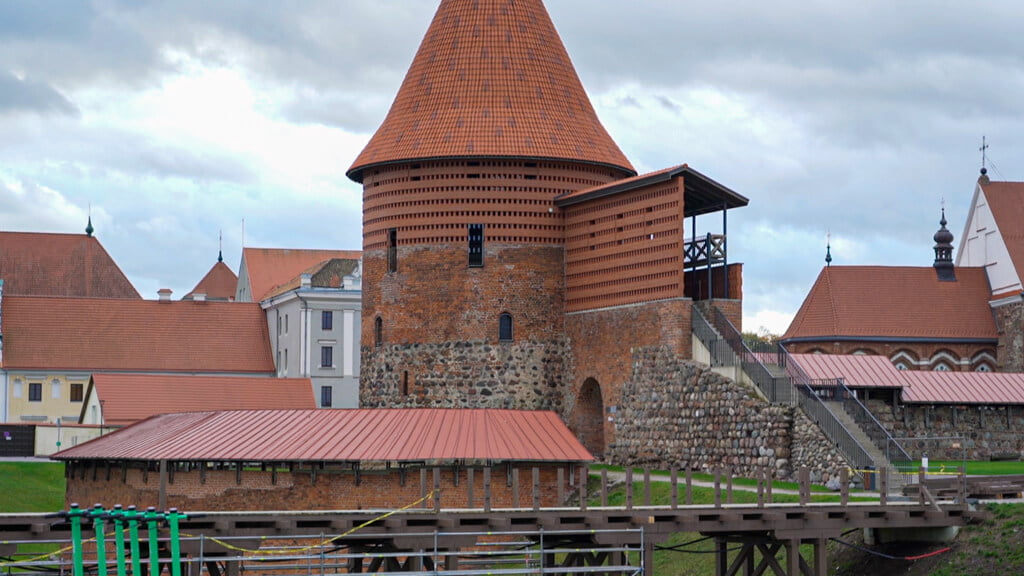
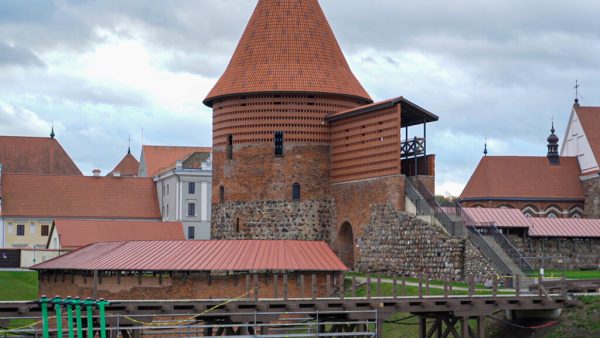
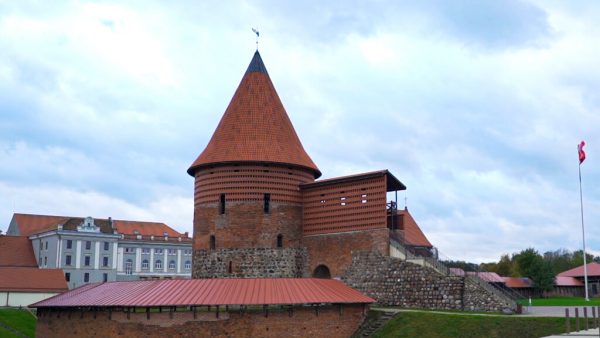
The brick castle at the confluence of the Nemunas and the Neris rivers was built in the 14th century to stand against the crusaders attacks. The castle was mentioned in written sources for the first time in 1361, when the Teutonic Knights destroyed it. It lost its strategic importance after the Grunewald (Žalgiris) Battle. Rebuilt several times. The square by the castle is decorated by the stone sculpture of “Kanklininkas” symbolizing the vitality of old traditions and historical heritage. The Santaka Park (Confluence) is rich in places worth a visit: ancient altar for pagan rites, hill of the Pope, where the pope John Paul II held mass in 1993, his monument, and others.
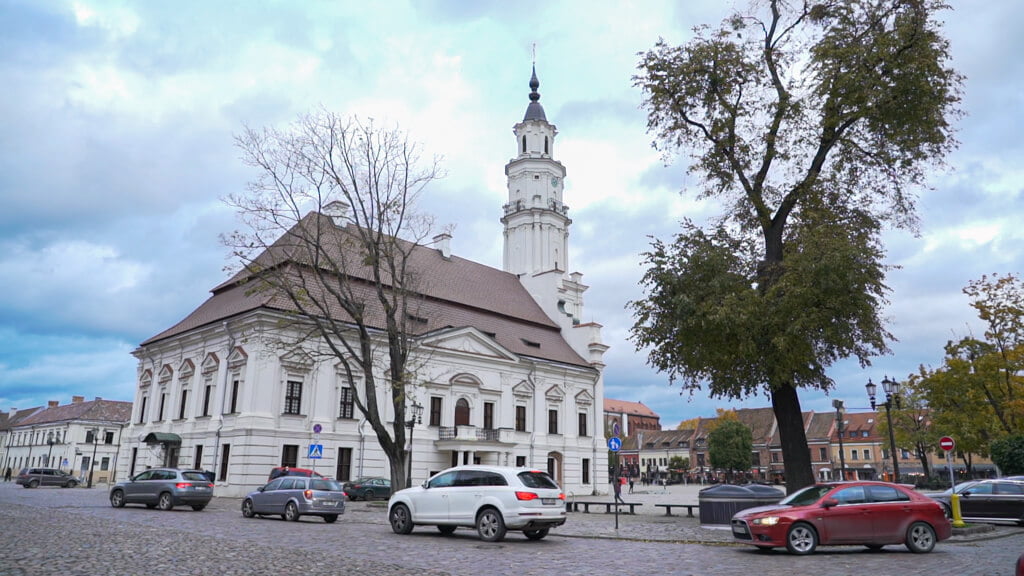
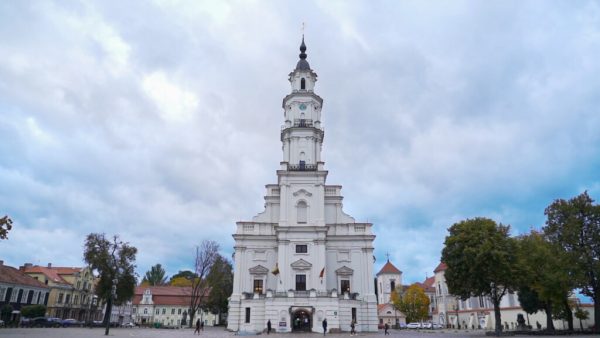
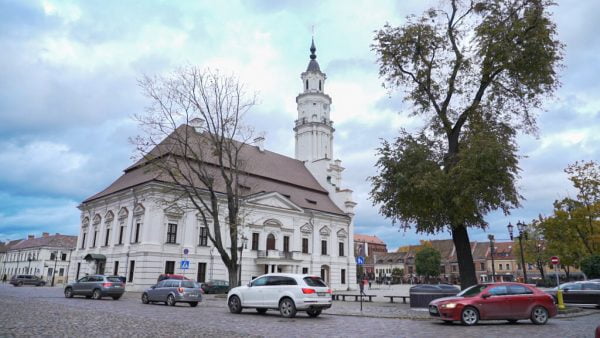
Town Hall. Local people frequently call it the “White Swan”. Its construction started in 1542, acquiring the present look after reconstruction in 1780 (arch. Jan Mattekier). It displays features of Gothic, Baroque and early Classicism. In the Middle Ages the Town Hall was the centre of Kaunas, and the square served as the main market place. Redbrick houses of rich merchants and representatives of city government (15-16th centuries) surround the square. After the last reconstruction of 1970, the Town Hall was converted into a Palace of Weddings. The Cathedral Basilica of the Apostles Peter and Paul is the only one in Lithuania with a basilican plan. After reconstruction it acquired Renaissance and Baroque features. The Cathedral has nine altars, its sacristy is covered by crystal-shaped vaults. In the southern wall, there is the tomb of priest and poet J. M. Maironis. The first cardinal of Lithuania Vincentas Sladkevičius is also buried in the Cathedral.
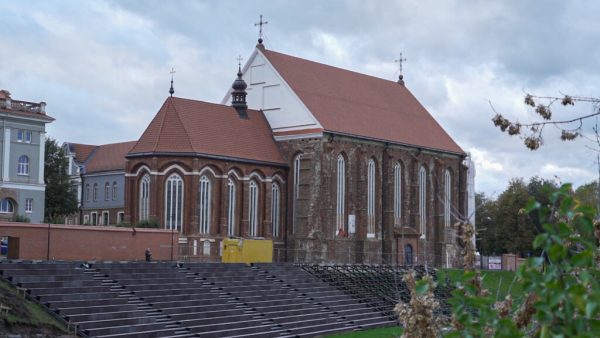
Vytautas Church (15th century). It is one of the first Gothic brickworks in Kaunas, one of the most popular churches among Kaunas people, formerly part of a Franciscan friary. Writer and high-ranking priest J. Tumas-Vaižgantas is buried in it.
Immediately to the rear of the Jesuit Church and Monastery is a mysterious and impressive Gothic style building called Perkūnas House. It is thought that the house was built in the 2nd half of the 15th century, famous for stories of Hanza merchants and a statue of Thunder god (Perkūnas in Lith.) found in the wall in the 19th century. Now the House belongs to the Jesuit Grammar School. It displays the life and works by A. Mickiewicz; exhibitions are arranged, theatrical tours, and workshops of traditional crafts are organized there. Next to the Maironis Museum of Literature there is a house marked Rotušės 14. It attracts one’s eye by the architecture of historical forms and a playful turret seen from the courtyard. The memorial plaque reminds that in 1925-1940 there lived Vladas Jurgutis, member of the founding committee of Lithuania, a famous financier and a priest. He was the first manager of the Bank of Lithuania. The greatest merit of V. Jurgutis is that he created the financial system of the country and introduced Lithuanian currency called litas in 1922. Vilnius str. is the most beautiful street of the Old Town and only for pedestrians. Many buildings there date back to the 16th century, some of them are reconstructed. Even the telephone booths witness the fact that the street joins the old and the new city.
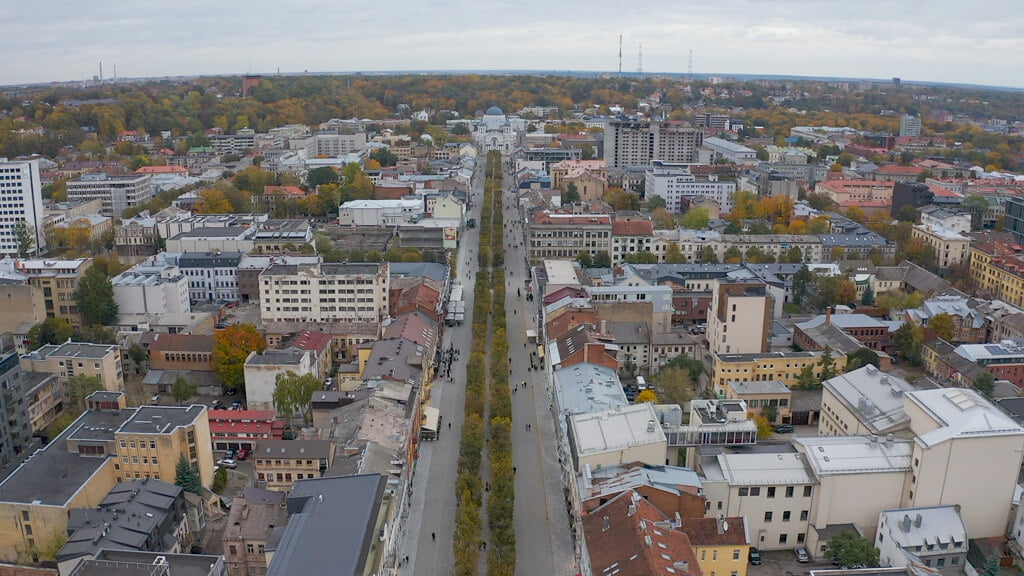
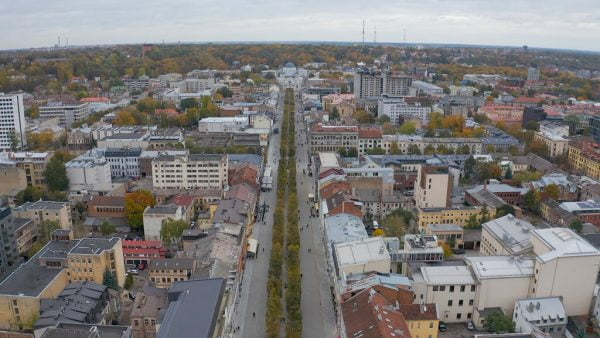
Laisvės alėja (Freedom Avenue) is a 1.7 km long street of boulevard type for pedestrians connecting the Old Town and the New Town. The beginning and end of the avenue formed in the 19th century fits exactly the east-west direction. The most important objects of the New Town are concentrated in it or next to it: Kaunas State Musical Theatre, the Main Post Office, the building of the Bank of Lithuania, Vytautas Magnus Museum, monument to Freedom, M. K. Čiurlionis Museum, A. Žmuidzinavičius Museum, Devil Museum, Church of St Michael the Archangel.
UNESCO design city. Kaunas became the first city in East and Middle Europe having received the status of UNESCO design city in 2015. Design cities belong to the network of creative cities, which was established by UNESCO in 2004.
Kaunas free economic zone (FEZ) is an industrial development territory covering 534 ha area, where tax and quota discounts as well as special rules for activities are applied in order to provide favourable conditions for investors. Kaunas FEZ was established in 1996; however, the first clients came only in 2004. It is a very modern zone, perfectly arranged, and the total investment sum is 680 million euros.
Only one fourth of the territory is working with 34 investors at present. A perspective plan foresees to connect FEZ and Kaunas airport territories. There work about 5 thousand employees. Enterprises of the following profiles are operating at present: furniture industry, production of medical equipment, electronics, as well as logistics. The zone is called “an industrial miracle next to Kaunas”. It is situated in Karmėlava, not far from the airport. It is not only Lithuanian companies that were established here but global corporations as well: Helia, Continental (car industry giants), producer of health care means Hollister. Kaunas has a great industrial potential, which helped attract investors.
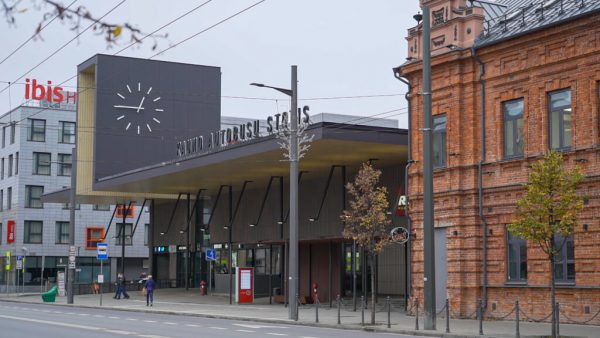
Kaunas is proud of its Bus Station, as there is nothing like it either in Lithuania or East Europe. It is the visit card of the city. It was opened in 2017 as the largest and most modern bus station in Lithuania, reconstruction cost 9 million euros. To buy a ticket, one can refer to a traditional desk or use self-service terminal, numerous information screens and a novelty – “drive” service, meaning that one can hand in or receive dispatches without getting out of the car. There are many modern cafes, restaurants and shops.
Žalgiris Arena is a close sport complex of international level on the island (length 1.5 km, area – 30 ha) in the Nemunas River. It is one of the biggest arenas in the Baltic States built using EU support funding. It was officially opened in 2011 with capacity of 15 000. The largest information cube in Baltic and Scandinavian countries is mounted there, and the entire hall is surrounded by 262 m long LED screen band. The space is easily adaptable for smaller events. Concerts, shows, sport competitions take place there. Private events, music awards are arranged in it as well. Such world pop stars as Lenny Kravitz, Sting, Zucchero, James Blunt and others performed there.